Indian food dictionary
You can find Indian food everywhere in the world, and you’ve probably already ordered it in your country. But once you arrive in India you realize you don’t really know anything about what’s what. Indian food changes from region to region, and each area has its own special flavors and cooking styles. From spicy curries to mild rice dishes, from street food to home-cooked meals, the variety is endless. Learning about these foods shows how diverse India is, even though it is one country.
So hopefully this blog will help with your future orders!
FYI: India is very much vegetarian. Therefore, a lot of restaurants will be vegetarian, especially in the more remote places. But don’t worry if you are a meat/fish eater, there are also a lot of non-veg places to go to!
Some important words and ingredients you should know that you’ll find on every menu:
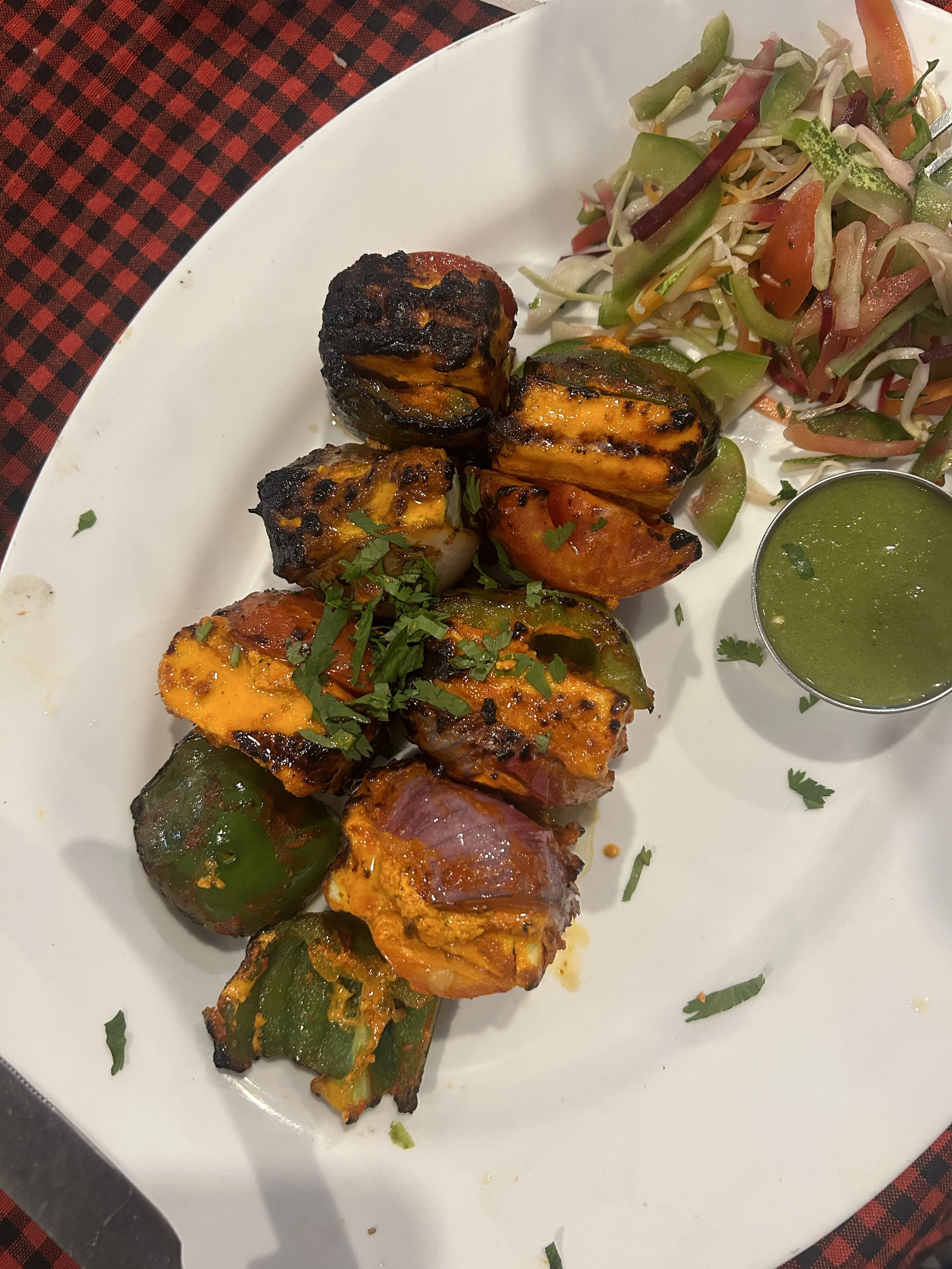
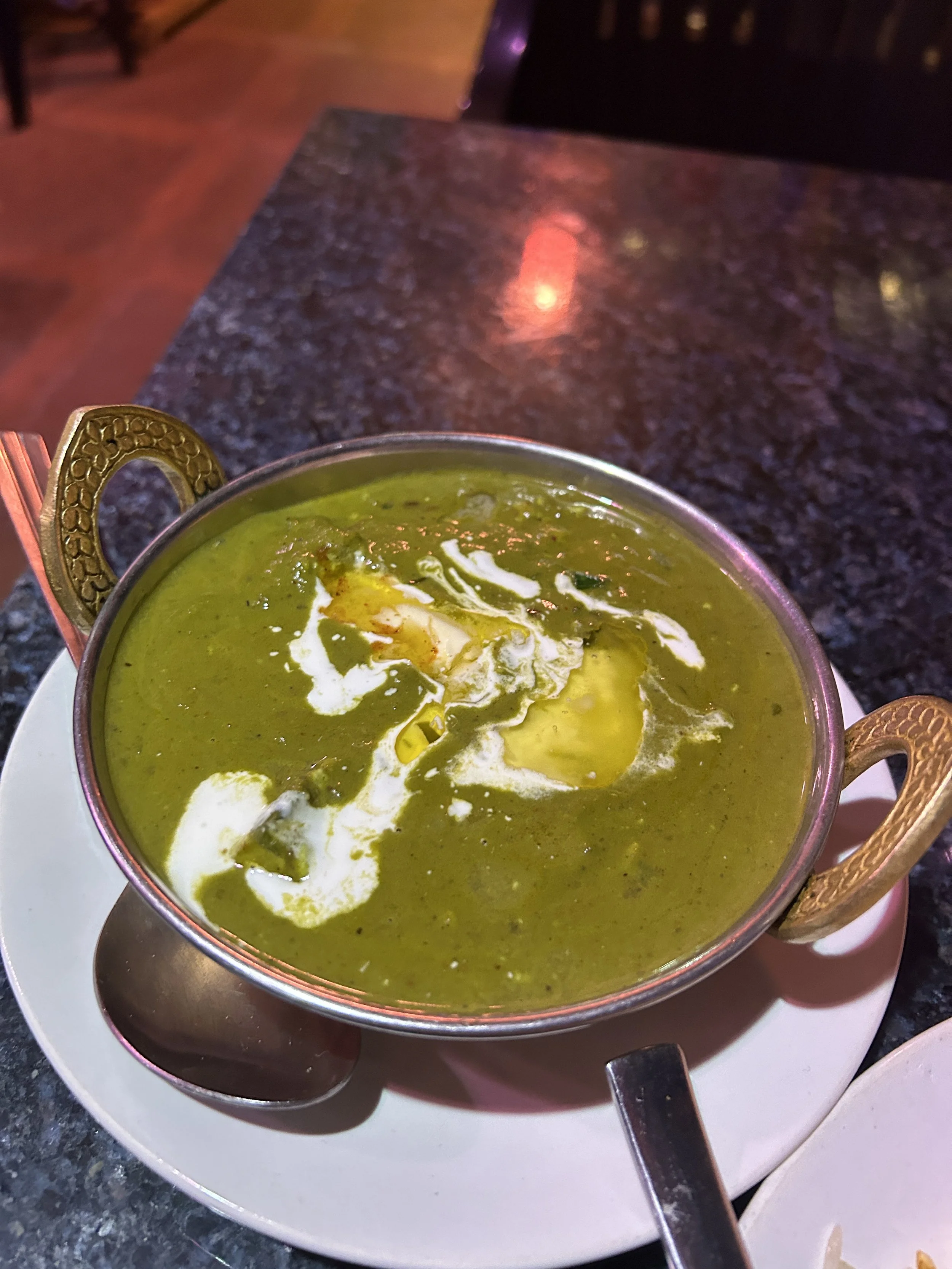
👉🏼 Lexicon: Dal = lentils / Paneer = Cottage cheese / Chana = chickpeas / Jaggery = unrefined sugar / tandoori = food is cooked by direct heat + hot air + smoke, requiring a clayed oven. Food is marinated with spices and yogurt / Masala (gravy) = thick, spiced curry base (usually onions, garlic paste, spices, oil/ghee/butter) / Ghee = clarified butter / palak = spinach
Indian breakfast
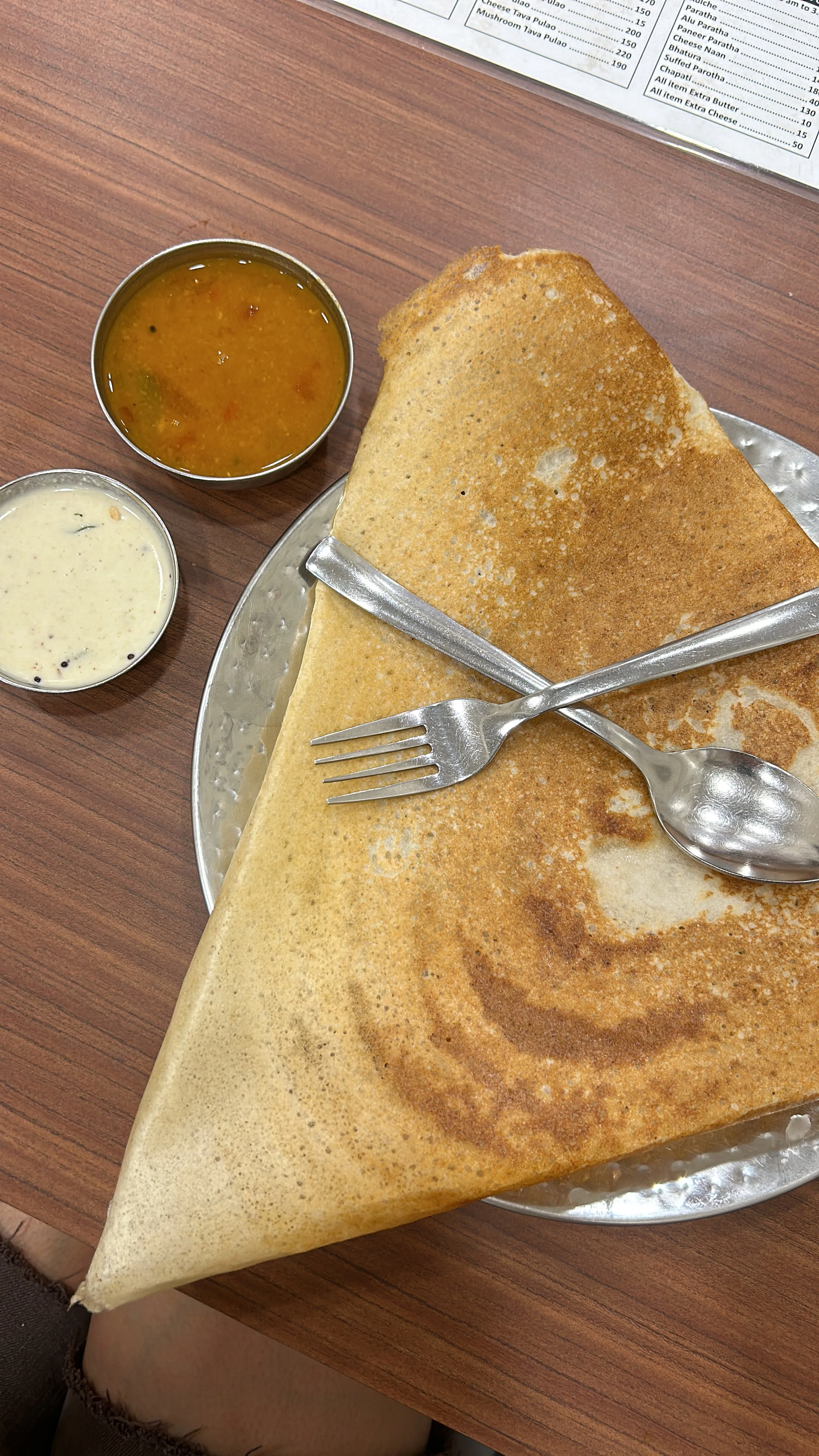
Dosa: Dosa is a popular South Indian food. It is a thin, crispy pancake made from a fermented batter of rice and urad dal (black gram). The fermentation gives dosa its slightly tangy flavor and makes it easy to digest.
Dosas are cooked on a hot flat pan until golden and crisp, then folded or rolled. They are usually served with coconut chutney, tomato chutney, and sambar (a spiced lentil soup). There are many Dosa varieties, but one of the most well-known types is masala dosa, which is filled with a mildly spiced potato mixture.
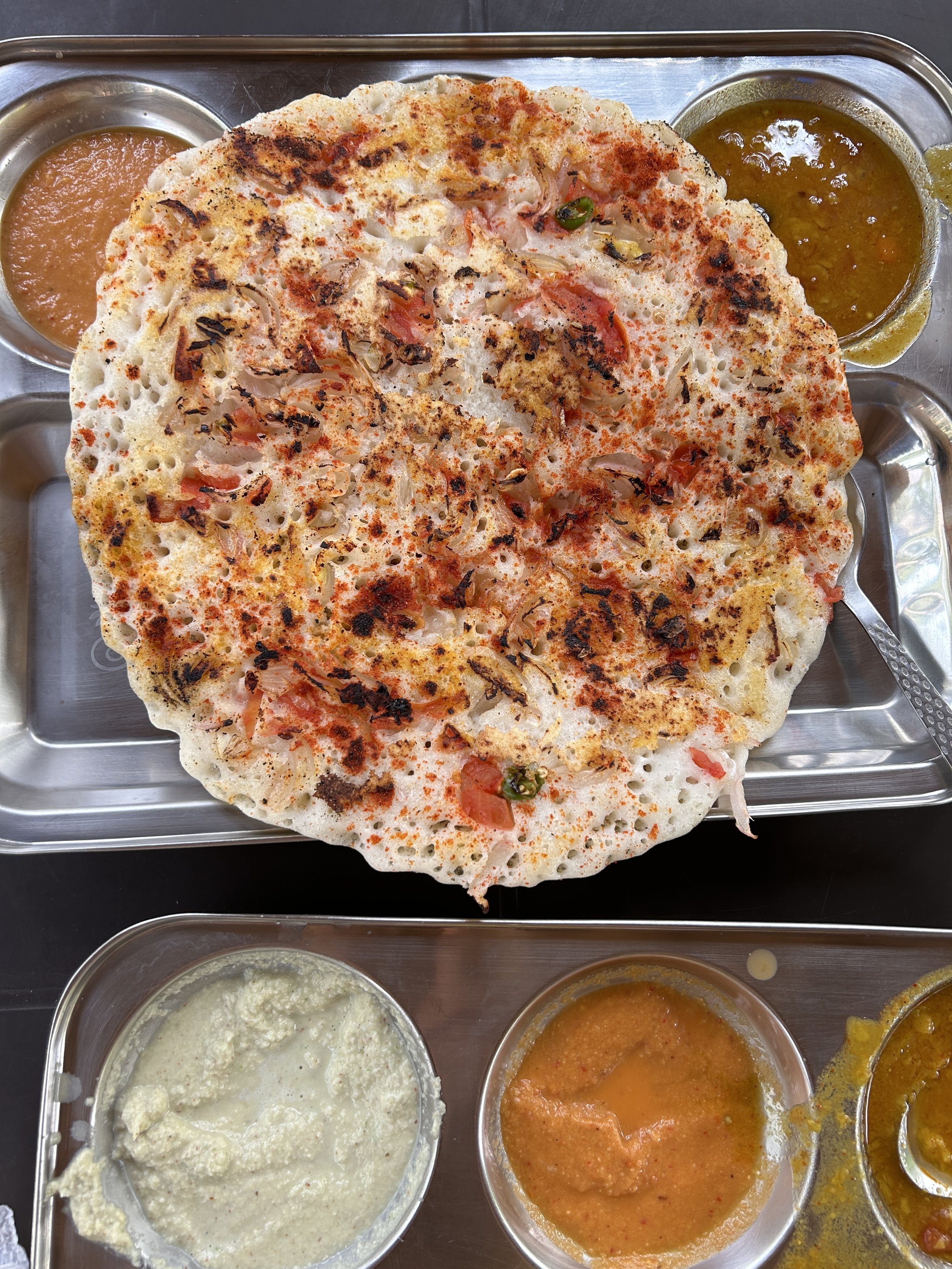
Uttapam: Uttapam is a traditional South Indian dish made from the same fermented batter used for idli and dosa. Unlike dosa, which is thin and crispy, uttapam is thick, soft, and more like a savory pancake.
It is cooked on a flat pan and topped with ingredients such as onions, tomatoes, green chilies, and sometimes carrots or coriander. Uttapam is usually served hot with coconut chutney and sambar.
Idly: is a traditional South Indian dish made from a fermented batter of rice and urad dal (black gram). The batter is poured into small molds and steamed, which makes idlis soft, fluffy, and light. They are commonly served with coconut chutney, tomato chutney, and sambar. Because they are steamed and not fried, idlis are considered very healthy and easy to digest.
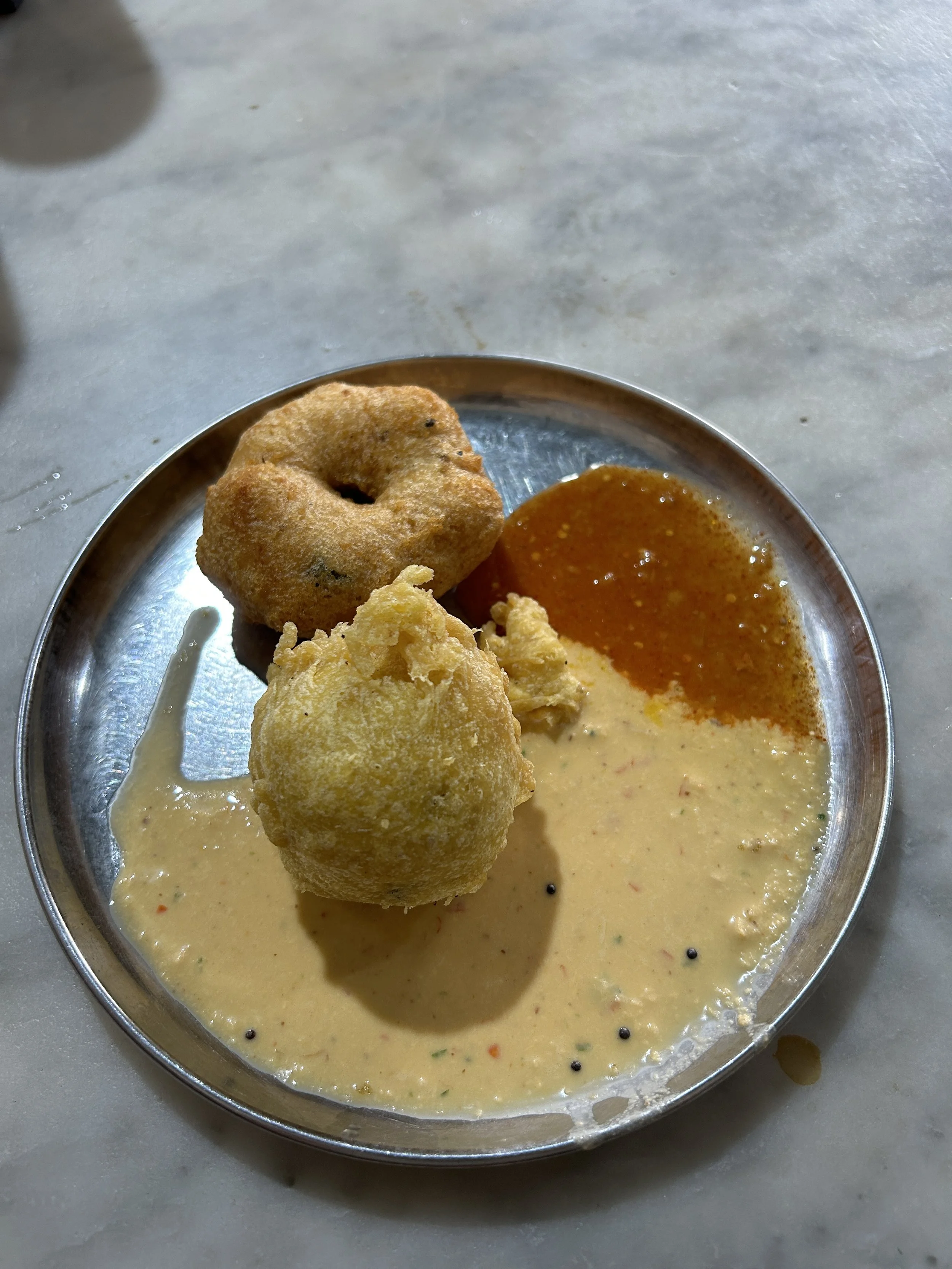
Vada: is a popular South Indian savory snack made mainly from urad dal. The dal is soaked, ground into a thick batter, shaped like a small doughnut, and then deep-fried until golden brown and crispy on the outside while staying soft inside. Spices like black pepper, green chilies, curry leaves, and ginger are often added to the batter for extra flavor. It is usually served with coconut chutney and sambar.
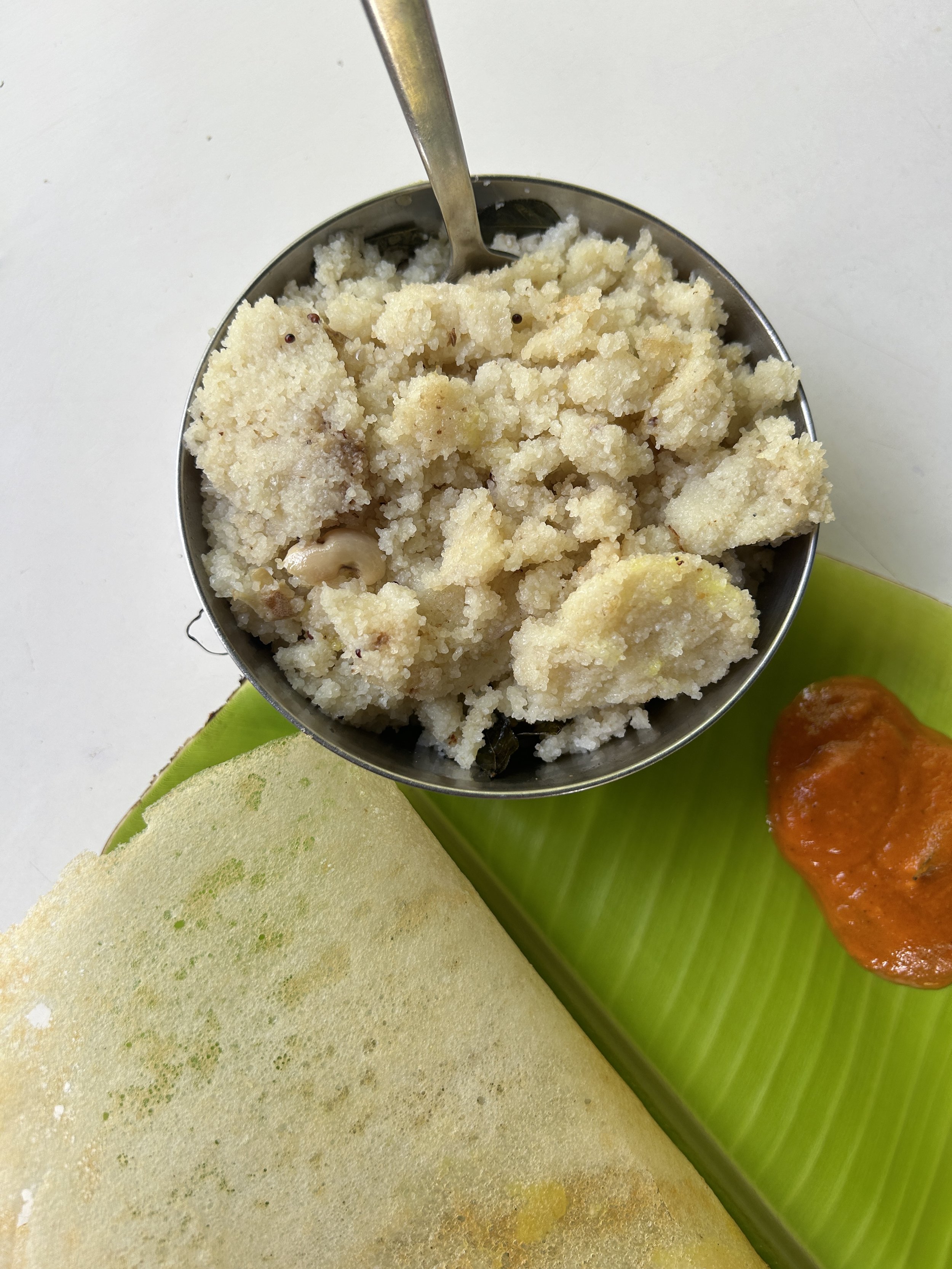
Upma: Are made from rava (semolina). It is cooked by roasting rava and then simmering it in water with spices, vegetables, and seasonings until it becomes soft and fluffy.
👉🏼 What are chutneys and sambar?
Chutney: common ones include coconut, mint, coriander, peanuts, lentils, chilies, ginger, salt, and sometimes lemon juice or tamarind for tanginess. These ingredients are blended together using a stone grinder or a mixer with a little water.
Sambar: lentil-based stew that is commonly served with idli, dosa, vada, rice, and other meals. It is made using toor dal (split pigeon peas), mixed vegetables, tamarind, and a special blend of spices known as sambar powder.
👉🏼 Morning drinks include:
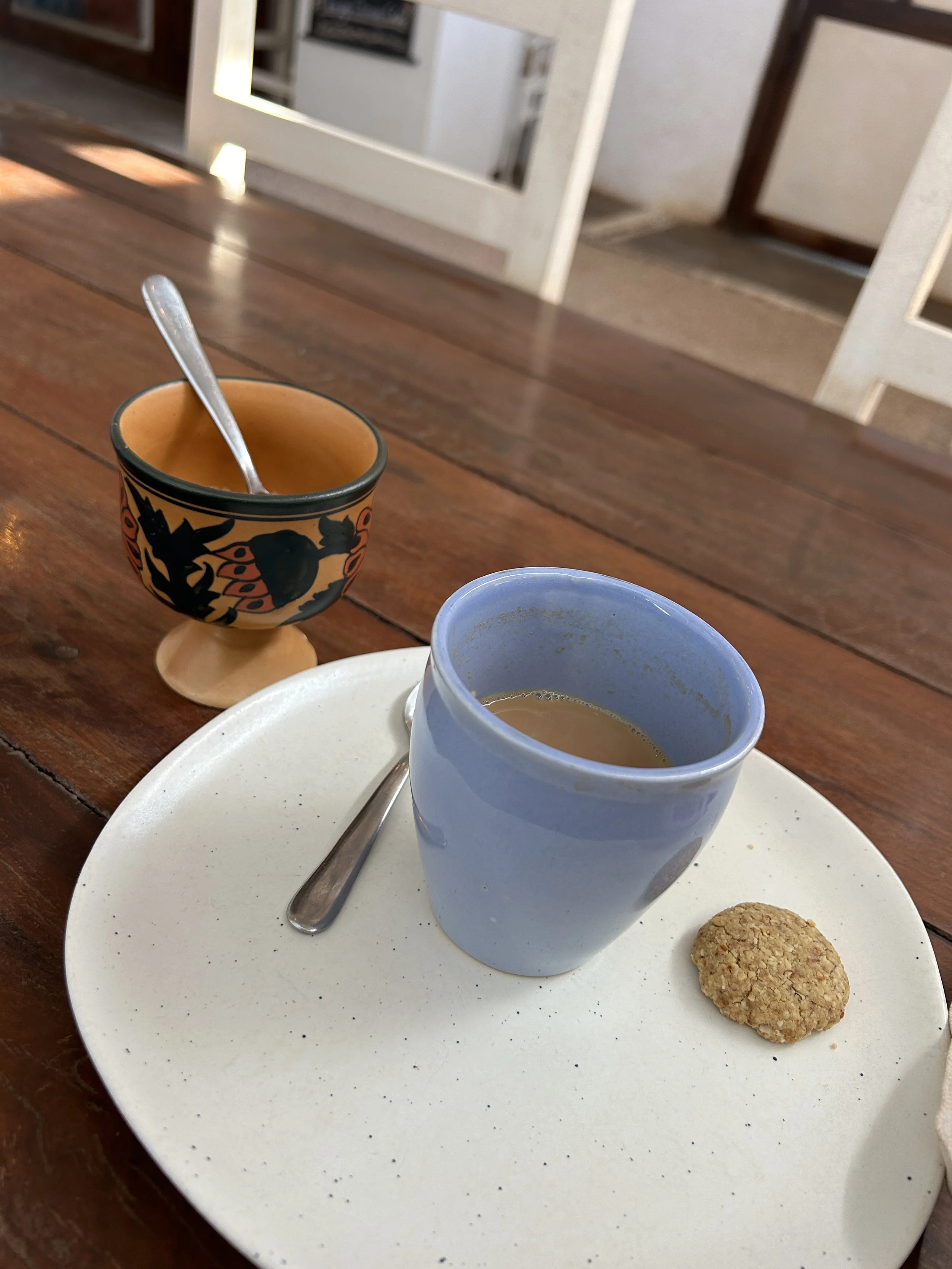
Masala Chai: Black tea with milk and spices
Ginger Tea (Adrak Chai) – Helps digestion
Cardamom/Elaichi Tea – Aromatic and mild
South Indian Filter Coffee – Strong and sweet
Types of rice, lentils and breads (side dish)
Rice:
White rice
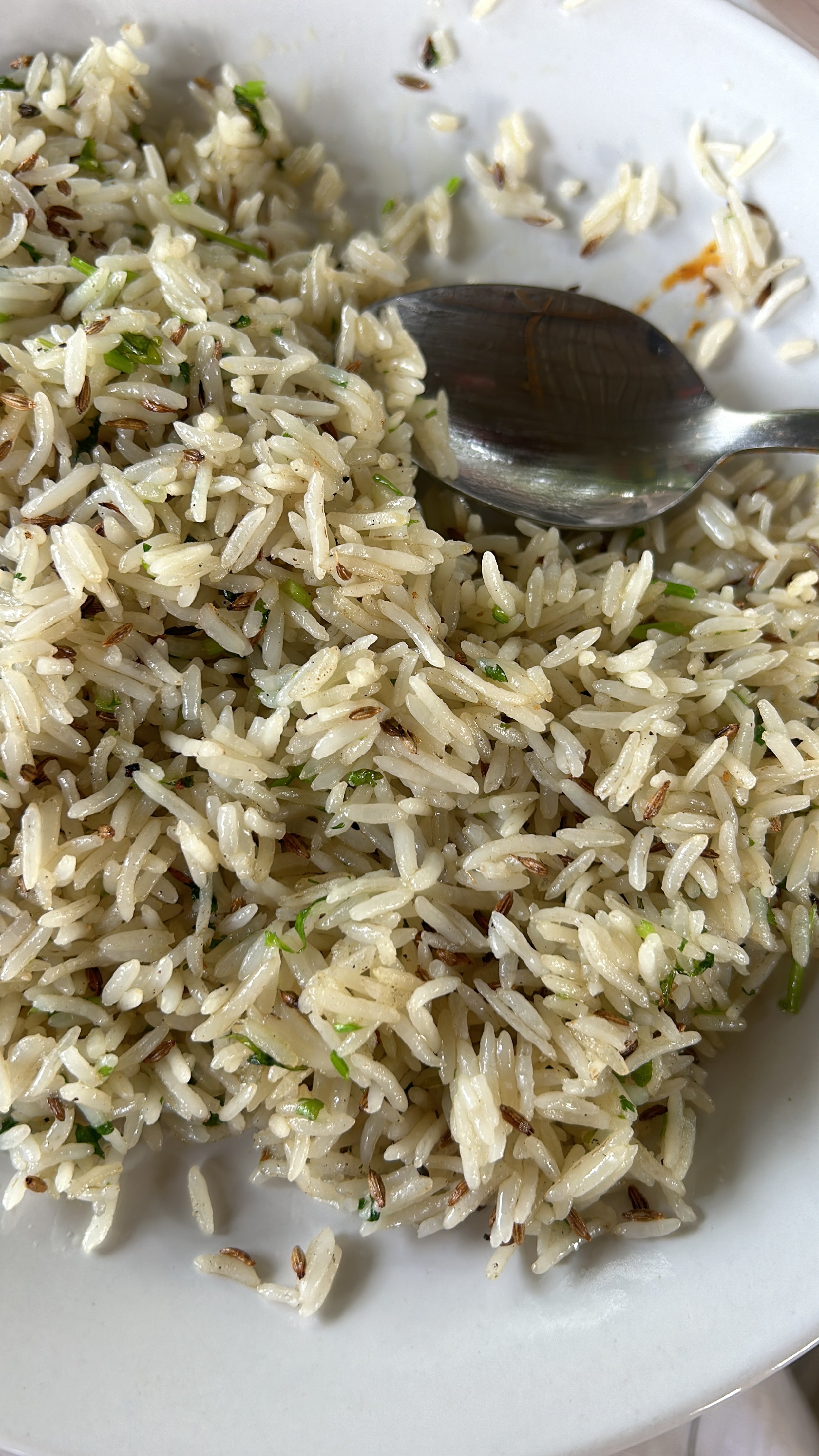
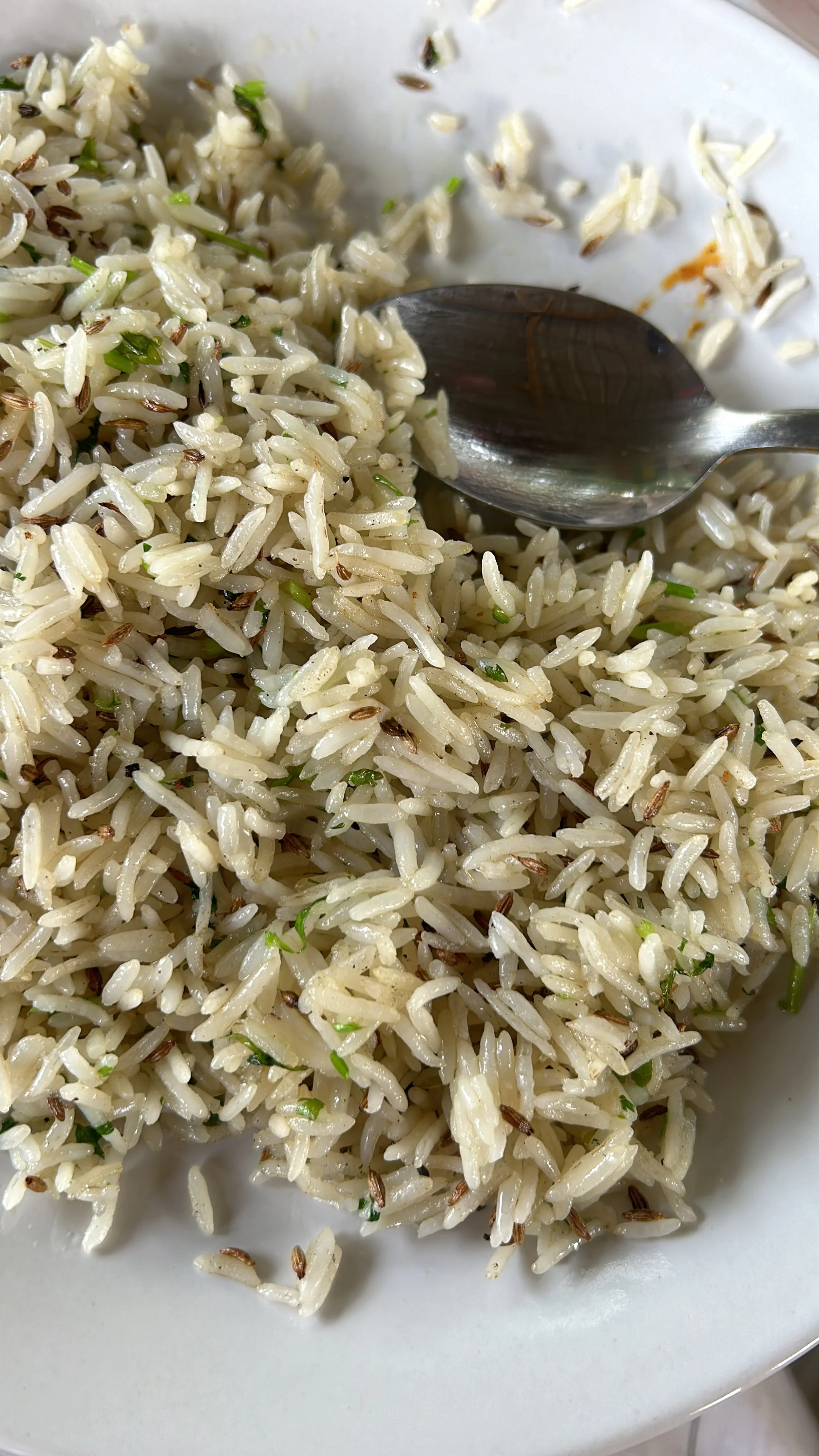
Jeera rice: Cumin flavored rice
Lemon rice: fresh lemon juice, turmeric, green chilies, curry leaves, mustard seeds
Tamarind rice: mustard seeds, curry leaves, dried red chilies, turmeric
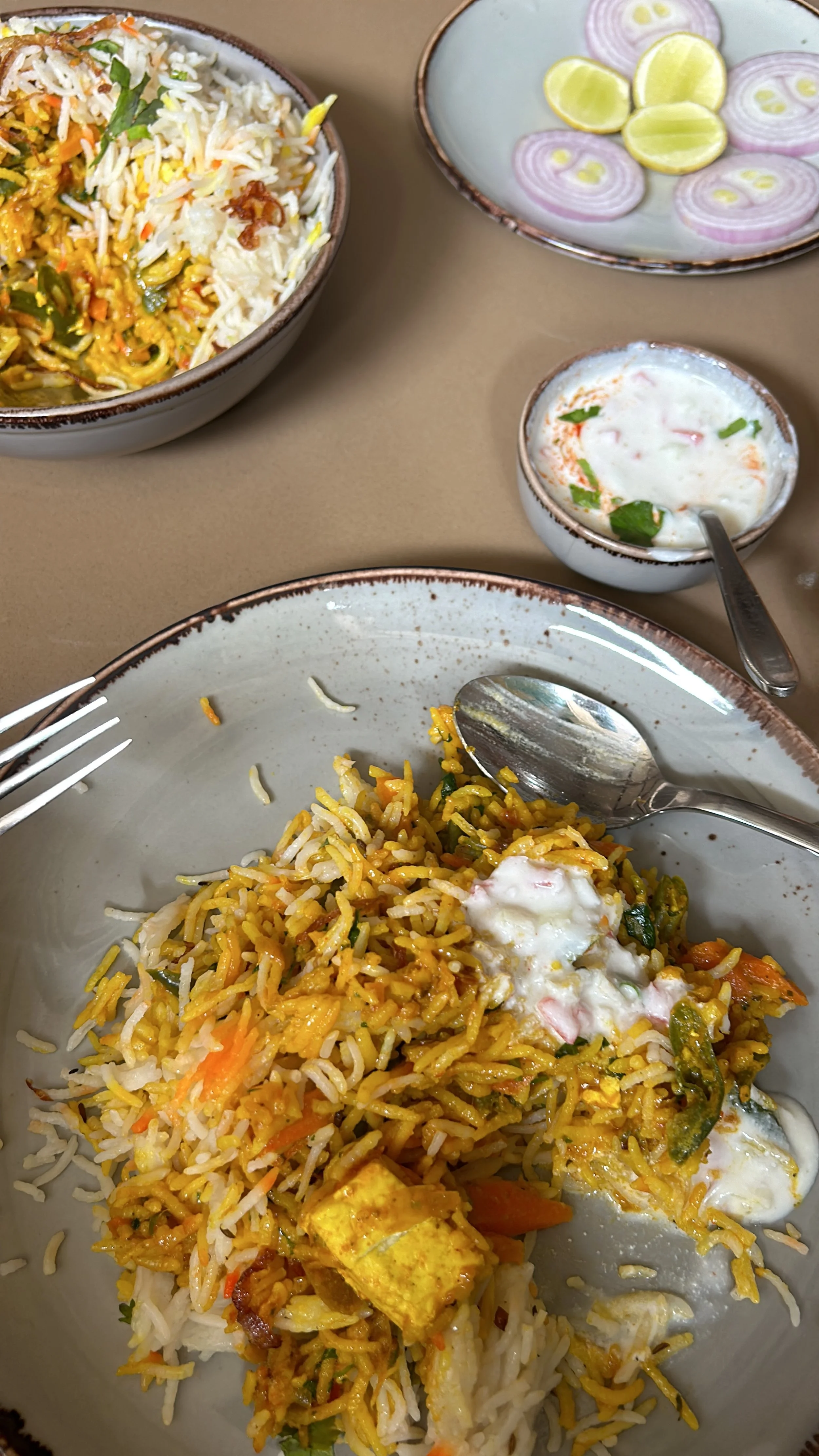
Pulao/pilaf: is a flavored rice dish cooked with spices, vegetables, and sometimes meat or seafood.
Byriani: Biryani is a rich, aromatic, and layered rice dish with spices, meat or vegetables, and sometimes eggs or seafood
Fried rice
Lentils:
Dal fry: Dal is cooked with onions, tomatoes, ginger, garlic, spices - tempering and lentils are cooking is done at the same time.
Dal Tadka: Dal is plain-cooked first, then tempering is added
Dal Makhani (whole black lentils & kidney beans): known for its creamy, rich, and mildly spiced gravy, mainly butter, cream, tomato, onion, garlic and spices (garam masala, cumin, coriander, chili)
Sambar: lentil-based stew (See above)
Breads:
Wheat-based flat breads:
- Roti/Chapati
- Paratha: Pan-fried, often layered or stuffed ( Aloo paratha = Spiced tomato filling / Gobi paratha = Cauliflower / paneer paratha = cottage cheese
White flour & tandoor breads
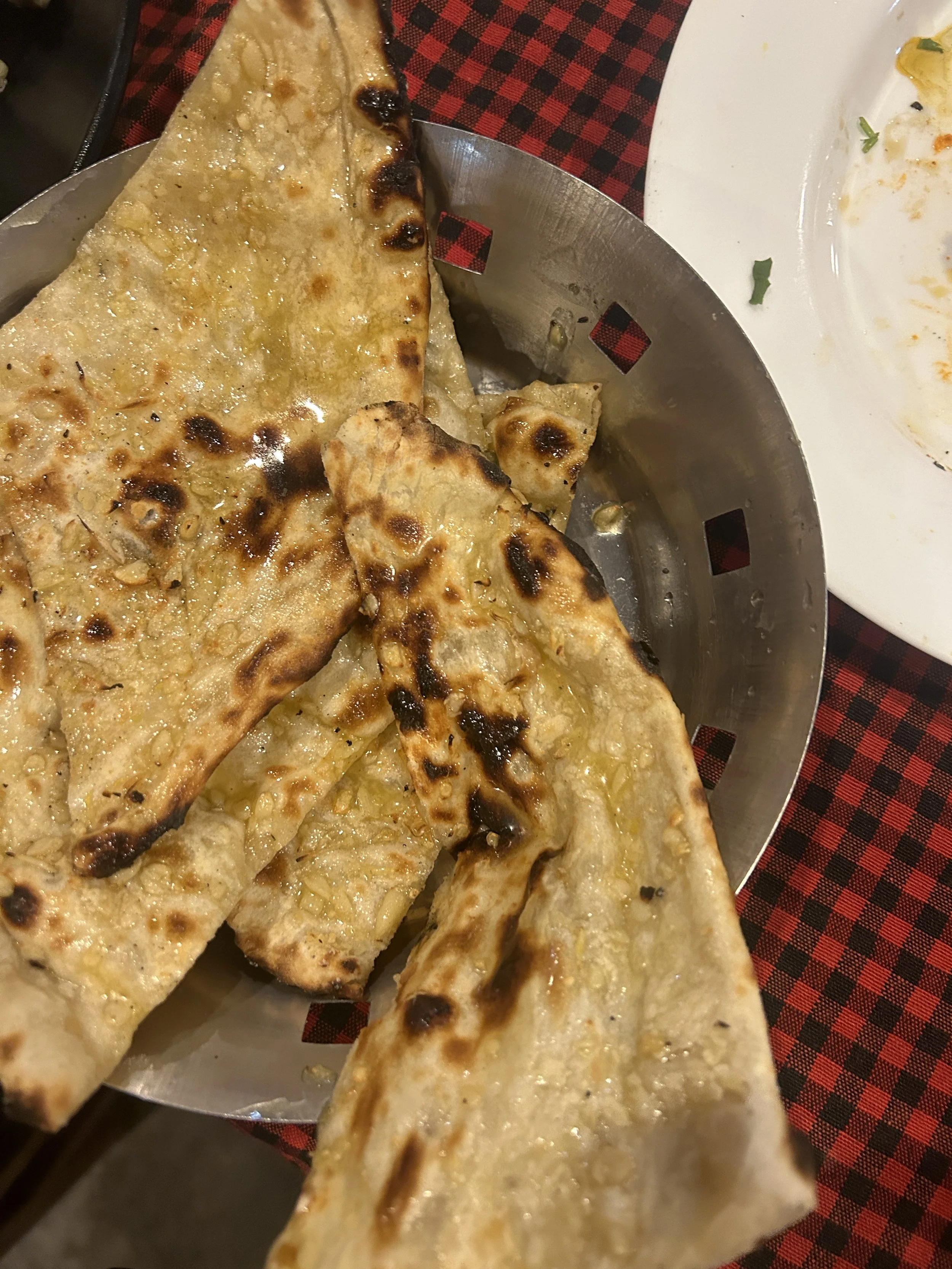
- Naan: Soft, leavened, baked in tandoor
- Bhatura: Deep-fried, fluffy bread
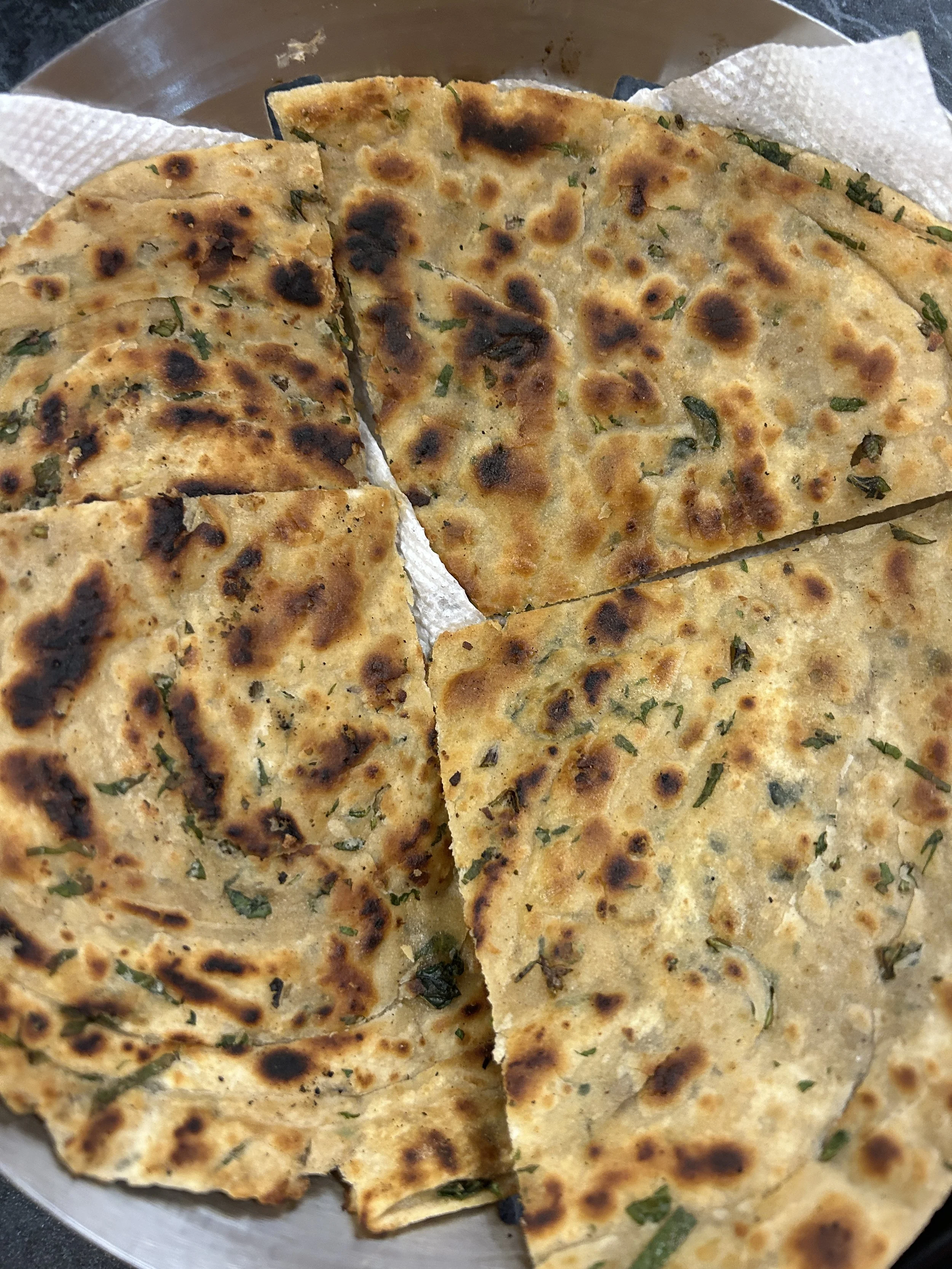
Chapati
indian dishes (lunch and dinner)
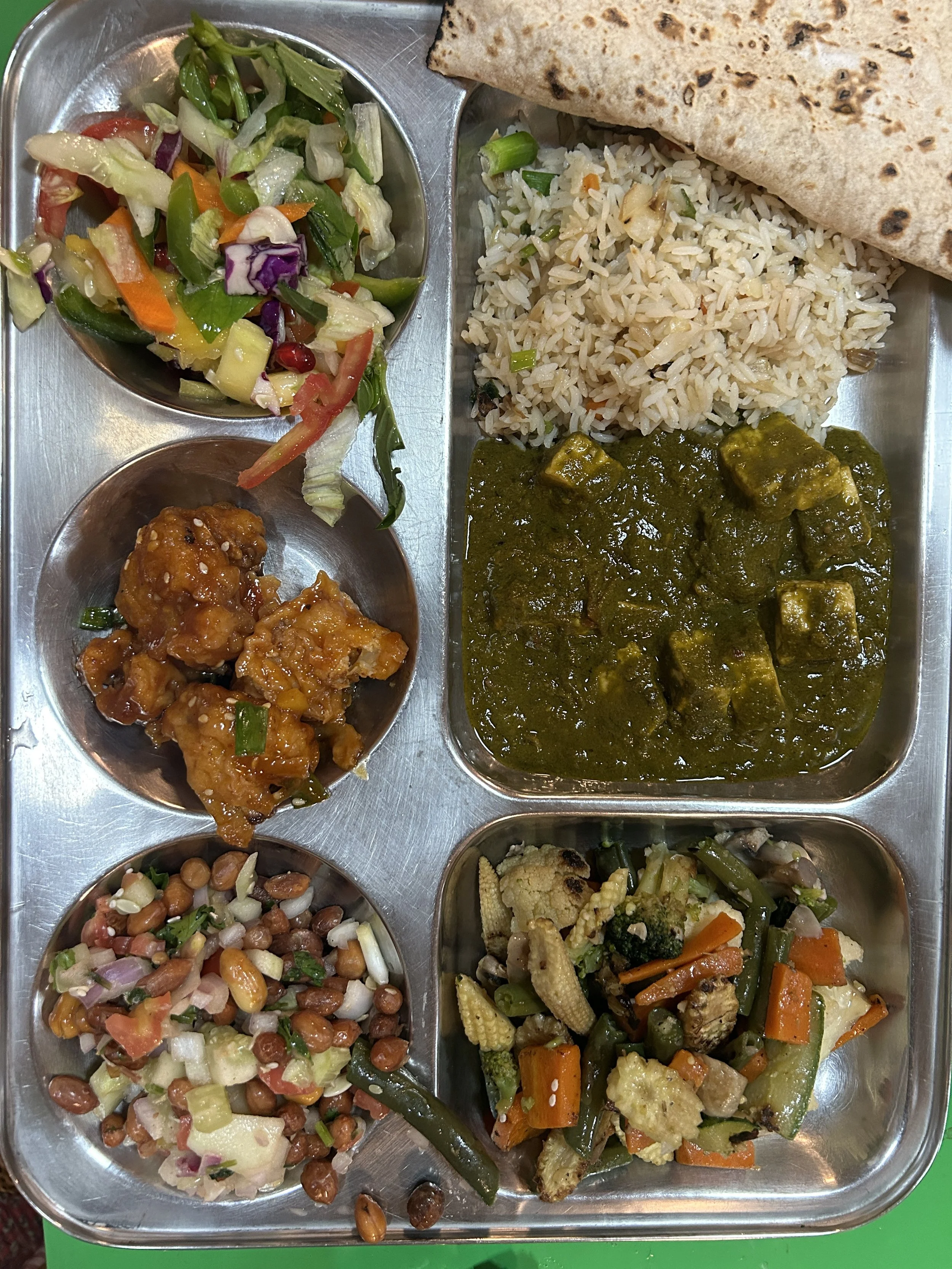
Thali: A thali is a complete meal served on a single large plate (traditionally metal or banana leaf). It brings together a variety of dishes such as rice, bread (chapati,
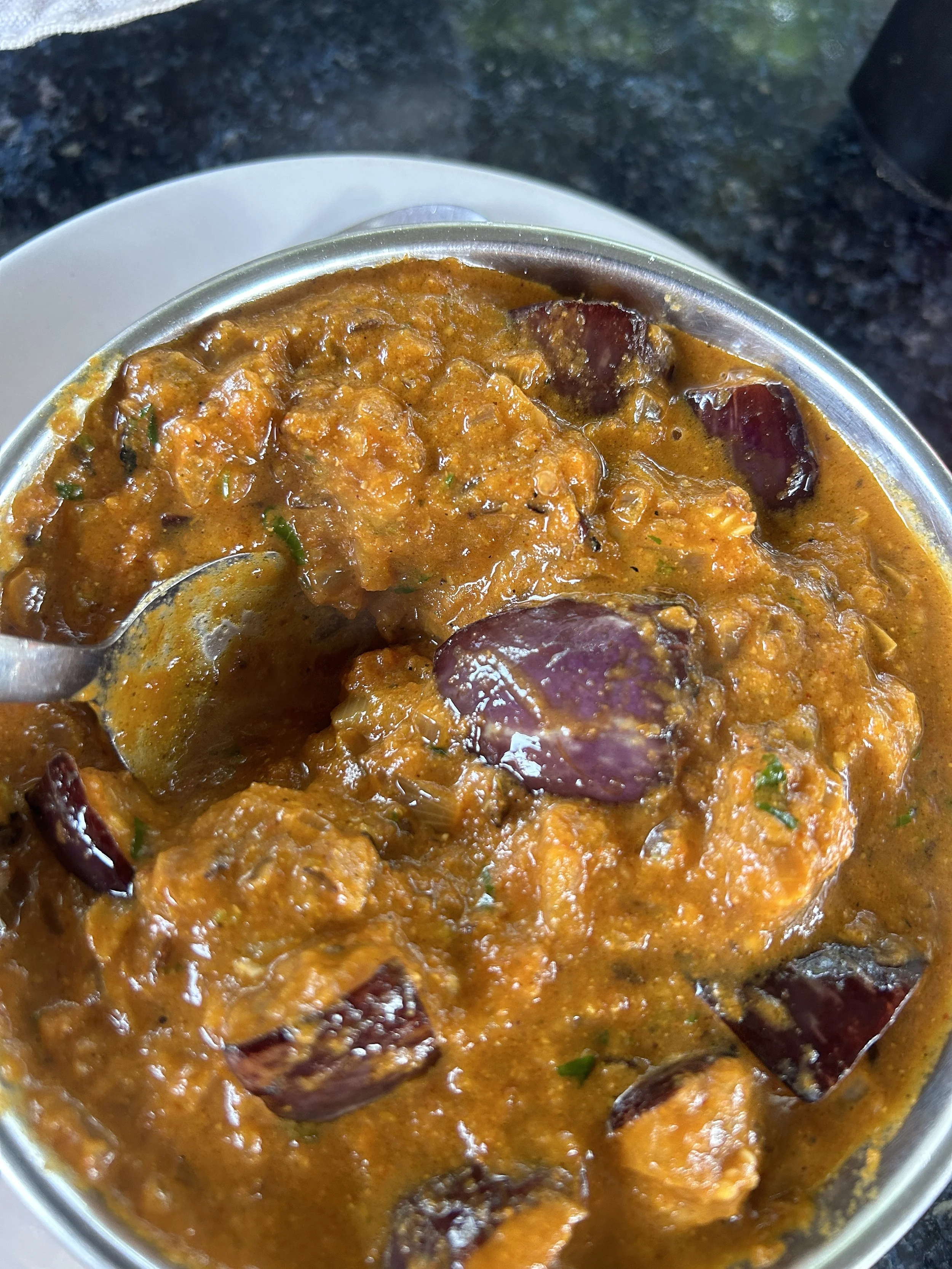
Masala: A masala dish is a rich gravy made of tomato and onions OR cashew cream OR coconut OR yoghurt with a blend of spices. You’ll then have a choice regarding what protein/vegetable you’ll want with it. Therefore, you’ll see dishes called paneer masala, chicken masala, mutton masala, eggplant masala etc
Chaat: Chaat is a savory, tangy, and spicy family of Indian street foods, originating in Uttar Pradesh, featuring a mix of crunchy, soft, sweet, and spicy textures and flavors from bases like fried dough (samosa), puffed rice, or potatoes, topped with chutneys, yogurt, onions, chickpeas, and spices like chaat masala
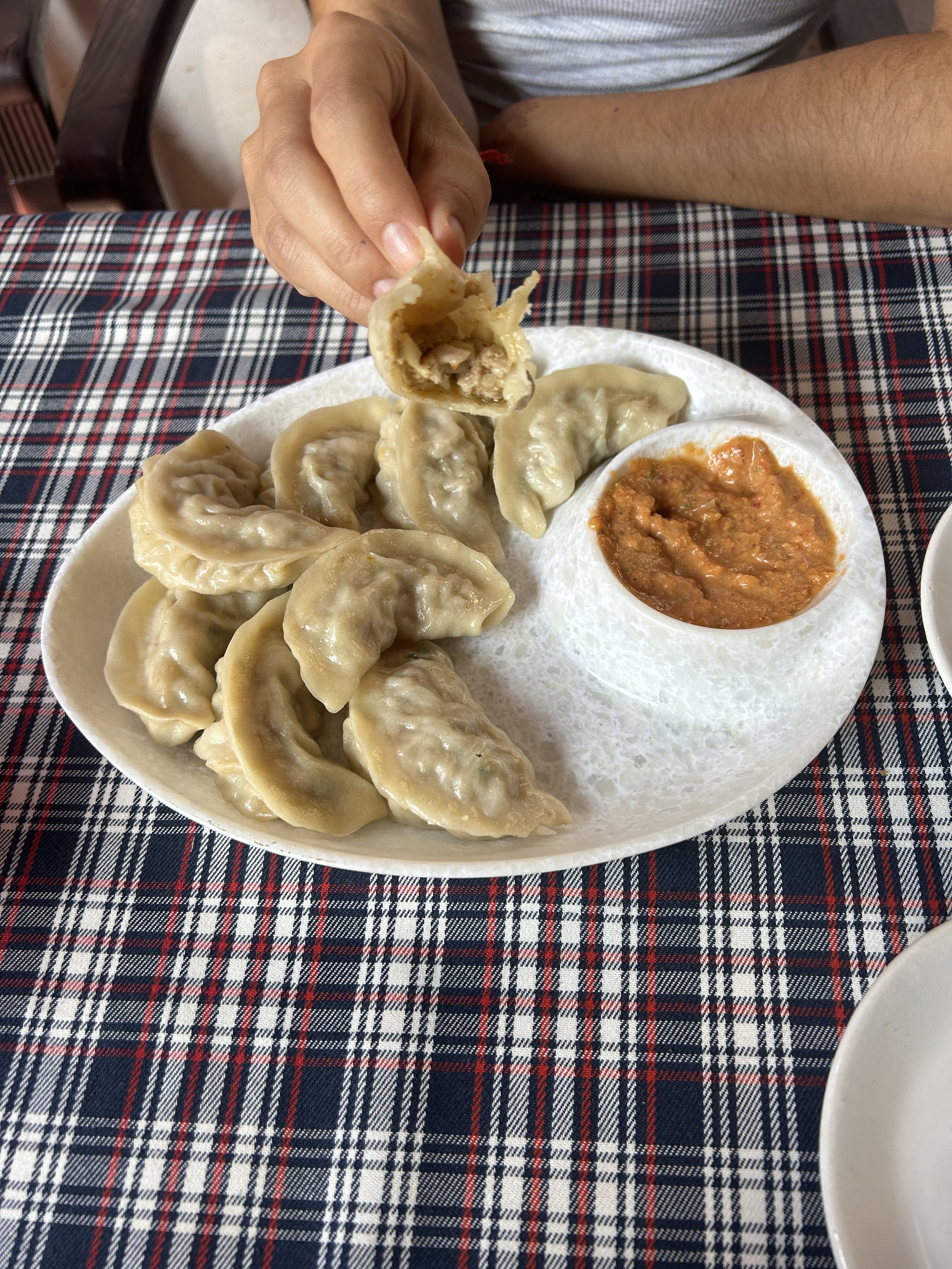
Momos: Although a Nepalese dish initially, a lot of places will have that on their menu due to the proximity of both countries. Momos are steamed or friend dumplings filled with meat, veggies, cottage cheese or fish. You will also find some combos.
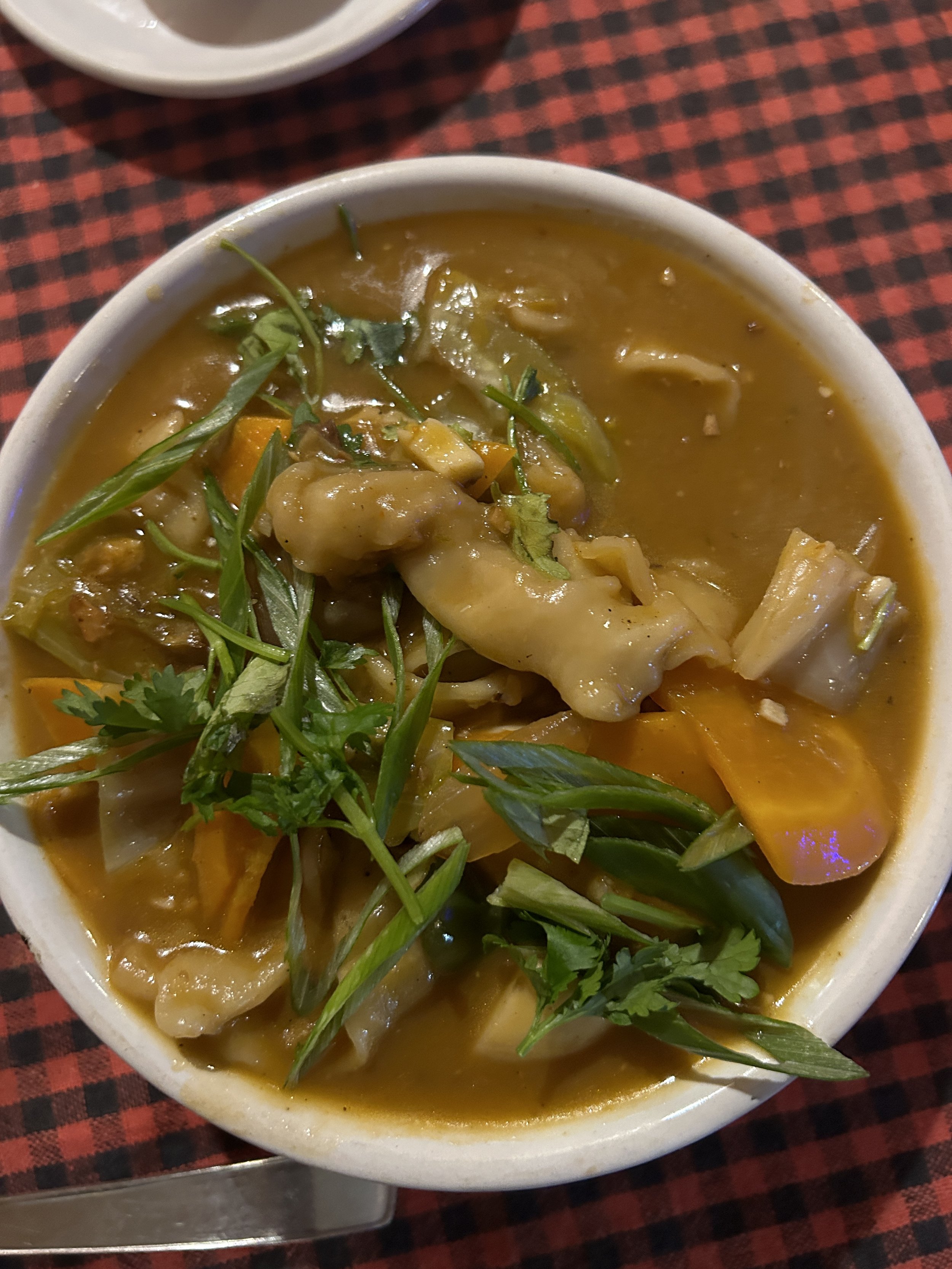
Thukpa: Similarly, this Nepalese dish is widely found in India. It is a hot noodle soup made of wheat noodles, vegetables chicken or beef, garlic and ginger, light spices and broth
Khorma: rich, mildly spiced Indian curry known for its creamy, smooth gravy. It is usually less spicy than other curries. The base will be either yogurt, cream, coconut milk, or nut paste (cashew/almond), the spices are cardamom, cloves, cinnamon (aromatic, not hot) and the Fat: ghee or oil
Kadai: Curry gravy (often masala) cooked in a kadai (special pan) with bell peppers
Jalfrazi: Onion, bell pepper, tomato, green chilies, garlic, ginger. Spices: coriander, turmeric, cumin, garam masala. Optional: vinegar or yogurt for tanginess. Add the protein of your choice
Roasts: You can find any type of protein, roasted
Manchurian: Small vegetable or meat balls, deep-fried until crispy, tossed in a spicy, tangy, soy-based sauce and served as starter, side dish, or with rice/noodles
Raita: yogurt-based side dish that is usually served with spicy meals to cool the palate and aid digestion. Many types of raita exist such as cucumber raita, tomato & onion, carrot, or a mix
Indian drinks
Typical indian drinks include:
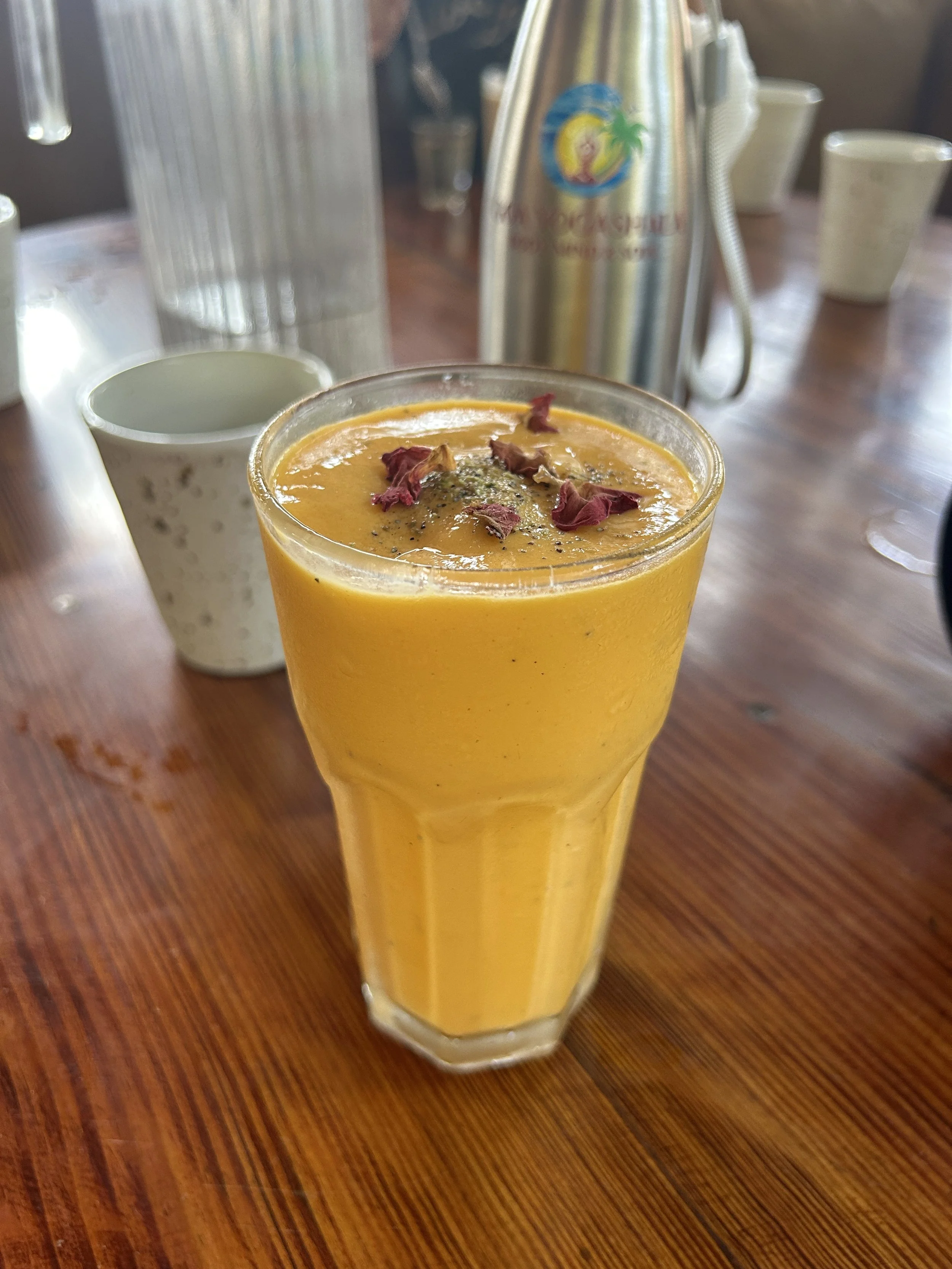
Lassi: yogurt-based drink, originally from Punjab.
It’s made by blending curd (yogurt) with water or milk, and can be sweet or salty.Teas and coffees (see above)
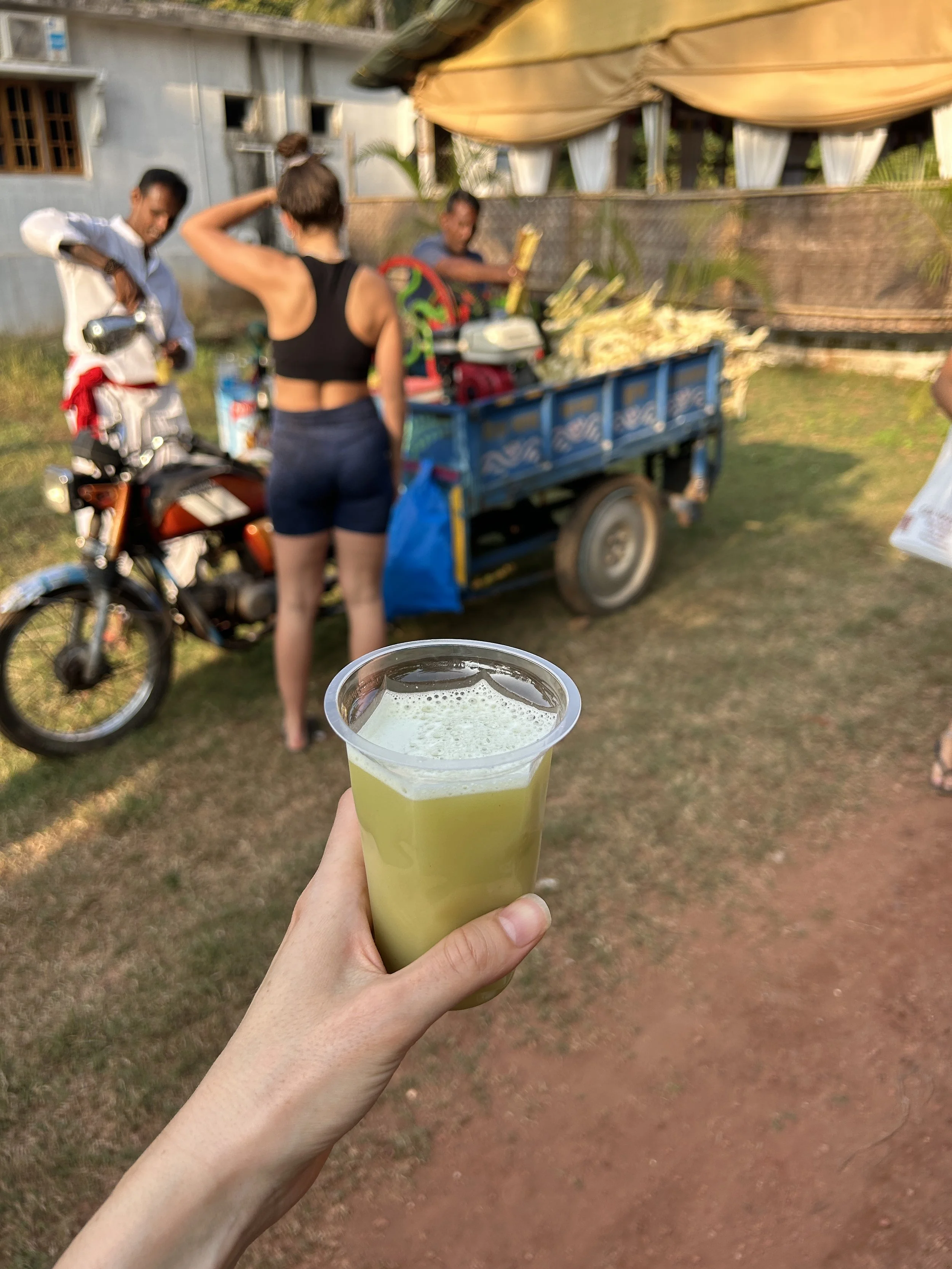
Sugar cane juice: Very sweet as it is pure sugar extracted from the cane
Fruit juice: Pressed